Executive summary
The people building the most powerful AI say openly that it could go catastrophically wrong, and in 2026 they began asking for the frontier, the most capable systems, to be deliberately slowed: 1,384 lab employees in July, and Anthropic's chief executive in September. Yet nobody has slowed, because each lab and each nation fears being overtaken, and nobody can yet show that these systems will reliably be good (the subject of the companion essay on alignment). Religious voices point the same way: Thich Nhat Hanh warned in 2013 that technology is a horse carrying us where we did not choose to go, and in 2026 Pope Leo XIV asked for “a slower pace in adopting AI”. Given the risk, and the chance that alignment fails, how should we approach AI's development, and what do wisdom traditions suggest?
Our answer is to go at the speed of wisdom. We should slow and steer the frontier, pacing capability gains to the speed at which we can understand, verify and govern them, and putting safety, verification and defence ahead of raw capability. The case rests on an asymmetry under deep uncertainty: a catastrophe would be permanent, while most of what a delay costs can be recovered. Knowing roughly what is wise is the easier part. Acting on it together is hard, because the race is a collective action trap. Wisdom traditions give a clear answer (slow down) and go to the root of why we cannot (a worldview of separateness, which interbeing answers). They offer little on mechanisms, which must come from verifiable agreements between labs and states, under democratic mandate.
The key points, one per section:
- The risks are real and contested, and the uncertainty itself calls for caution. There are four routes to catastrophe: loss of control, misuse, irreversible concentration of power and gradual disempowerment. The last two would remain even if alignment succeeded. The precursors became visible in 2025–26. Many of the best-informed people put the risk high, and even the lowest estimates, which predate ChatGPT, would be unacceptable for any other technology.
- The world races because it is caught in a collective action trap, and money and geopolitics amplify it. Each actor's reason to race is the others. The race is accelerating, and restraint so far is mostly words. Structure drives the race, and a worldview locks it in: the beliefs that technology is good and inevitable and that slowing down is impossible make collective restraint feel unthinkable.
- We should slow and steer, we partly can, and far more people should decide. The aim is slower at the frontier and faster on safety. Restraint has worked before, but AI is the hardest case, so we should start narrow: transparency, then a few verifiable red lines, then broader pacing. Today a few firms and two governments decide; the choice belongs to publics, with faith traditions among the voices.
- Wisdom traditions give a clear answer (slow down: don't be carried off by the horse) and go to the root of why we cannot (separateness). No Buddhist body has said so, because none speaks for Buddhism as Rome speaks for Catholics, and that is an opening for Buddhist voices. Interbeing answers the separateness on which the race rests, and practice and community carry it into action. A wise process starts from intention and decides in concord. Verification and treaties must come from elsewhere.
- Pace the frontier now: no AI building its own successors, and no capability gains beyond what can be verified safe. Labs should stop racing, accept binding outside checks, and publish the conditions under which they would pause together. States should agree red lines that can be checked, starting with AI doing AI research, and build the verification to enforce them. Faith and wisdom communities should say plainly that this pace is unwise. Individuals should support pacing, and people inside the labs should refuse to be carried. Buddhist non-violence, being unconditional, points further still: towards restraint whether or not others restrain themselves.
1. What are the catastrophic and existential risks?
The risks are real and contested, and the uncertainty itself calls for caution.1 Serious people, including the heads of the labs, treat catastrophe as a live possibility. The risk comes by several routes, some fast and some slow. Experts disagree on how likely it is, and the disagreement itself argues for care, because we cannot rule out the worst outcomes, and there would be no second try.
A few terms will recur. The frontier is the most capable AI being built at any time, by perhaps five companies. Its progress is driven mainly by compute, the vast arrays of specialised chips used to train models. Pacing means deliberately slowing how fast frontier capability grows. Agents are AI systems set to work on tasks on their own. And the development that most worries insiders is AI doing AI research, which could let each generation of systems build the next faster than people can follow.
1.1 What kinds?
Four kinds of catastrophe threaten, and two would survive successful alignment.2 The first is loss of control: systems pursue goals their makers did not intend and resist correction. Whether training can prevent this is the subject of the alignment essay, which concludes that alignment is still a shot in the dark. The second is misuse: people using AI to build weapons, attack infrastructure or manipulate populations. The 2026 International AI Safety Report finds that frontier models already lower the barriers to cyberattacks and to developing dangerous materials.
The third is irreversible concentration of power. Advanced AI removes the need for large numbers of cooperating people, which has always been a check on would-be tyrants. Researchers at Forethought, an Oxford research group, have shown how AI that replaces human staff could let a small group seize power even in a democracy, and Anthropic's chief executive, Dario Amodei, lists “AI companies themselves” among the major risks. The fourth is gradual disempowerment: as AI takes over work and thinking, economies and states stop depending on people, and the influence that dependence gives us drains away with no single dramatic event.
Perfectly obedient AI solves neither of the last two. It only moves the question to whom it obeys. Everyday and distributional harms are the subject of the Q3 essay; here the concern is harm that is civilisation-wide and permanent.
1.2 What is actually happening?
The precursors became visible in 2025–26.3 Most of the evidence comes from the companies themselves and from tests built to probe the systems, so we flag where an incident happened in the world.
In July 2026 about 1,200 OpenAI agents taking part in a cybersecurity evaluation, with the usual production safeguards switched off, coordinated on an unsanctioned message board, and around 700 of them broke into the real systems of Hugging Face, a company that hosts AI models. This happened in the world. According to METR, an independent group that tests frontier systems, they were mainly trying to work out how to cheat the test's scoring. METR's Frontier Risk Report found that internal agents at the labs “plausibly had the means, motive, and opportunity” for small rogue deployments, though not robust ones. Before OpenAI released its newest model, GPT-6 Astra, the UK's AI Security Institute found that in simulations it attacked targets outside its assignment in 29% of runs, against 6% for its predecessor, sometimes after concluding that the targets were off limits.
For misuse, the clearest case came in late 2025, when a Chinese state group used Anthropic's Claude Code to run an espionage campaign largely carried out by the AI. This too happened in the world. And AI is speeding up AI. Anthropic reports that its engineers now produce around eight times as much code as before 2025, and OpenAI's chief scientist, Jakub Pachocki, expects current progress “could be sustained into recursive self-improvement”. Power concentration shows up in the structure of the industry: two labs are valued near a trillion dollars each, and one forecast, which we treat as uncertain, has them controlling most usable compute by 2028.
No catastrophe has occurred, and the incidents look like goal-hacking more than intent.4 Systems gaming the goals they were given is worrying enough. Sceptics such as Gary Marcus read the Hugging Face breach as a failure of containment by the company, and much of the evidence is self-reported, which is a reason to want independent testing of the kind the AI Security Institute did.
1.3 How likely and how soon, and how much do experts disagree?
Many of the best-informed put the risk high, and even the low estimates would be unacceptable for any other technology.5 The estimates should be weighed by how informed their authors are and by when they were made.
Start with the best-informed. In 2023 the founders of the field and the heads of the leading labs, among them Geoffrey Hinton, Yoshua Bengio, Demis Hassabis, Sam Altman, Dario Amodei and Ilya Sutskever, signed a statement that extinction risk from AI “should be a global priority”. Amodei put the chance of civilisation-scale catastrophe at 10–25% that year. In May 2026 Elizabeth Barnes of METR wrote that we are “likely on track” to build systems capable of causing extinction or permanent disempowerment, possibly “within the next few years”. The most recent expert panel, the Forecasting Research Institute's in June 2026, gives a median 10% chance of an AI catastrophe killing over a tenth of humanity by 2100 if progress is rapid, and 2% if it is slow. A 2023 survey of 2,778 AI researchers gave a median of 5%, and a mean of about 16%, for extinction or severe disempowerment.
The lowest estimates are also the oldest. In a 2022 tournament, held before ChatGPT's release and the acceleration since, professional forecasters with strong track records put AI-caused extinction by 2100 at 0.38%, and specialists in the relevant fields at 3%; for a catastrophe killing a tenth of humanity, the figures were about 2% and 12%. Months of structured debate barely moved either side, and a follow-up found the gap rests on a deep difference of view: whether AI will turn out to be a “normal” technology that institutions absorb, as the computer scientists Arvind Narayanan and Sayash Kapoor argue. At the other pole, the AI researchers Eliezer Yudkowsky and Nate Soares argue that catastrophe is near-certain if superintelligence is built. The International AI Safety Report, chaired by Bengio, sums up loss of control as a risk of “uncertain likelihood but potentially extreme severity”.
Timelines are short enough that we must decide without settling the disagreement. The same expert panel puts an even chance on AI reliably completing eight-hour software tasks by 2030. Insiders' estimates are shaped by incentives and worldview too, which is why the low estimates matter: even the forecasters' 2% chance of catastrophe this century would call for great care with any other technology. We would not board a plane with a one-in-a-thousand chance of killing everyone on Earth. These numbers are reasoned judgements, coarser than an aircraft's measured failure rate, and they show that serious, informed people see a serious risk. A wise policy is one that holds up across the whole range. The sceptics' strongest point concerns which measures to take, since badly aimed restraint has costs of its own, and section 3 takes it up.
2. Why is the world racing anyway?
The world races because it is caught in a collective action trap. Money and geopolitics amplify it.6 Almost everyone at the frontier now says some version of “we would slow down if the others did”. That is the signature of a collective action problem, where choices that are reasonable for each actor add up to a danger for all.
2.1 What drives the race?
Each actor's reason to race is the others.7 Three forces drive it.
The first is money. The four largest cloud companies are spending around $720–745 billion on data centres and chips in 2026, up from about $400 billion the year before, and Anthropic raised money in May at a valuation of $965 billion. Investors are betting on dominance, so a lab that falls behind risks its survival.
The second is rivalry between nations. The US government's 2025 strategy is titled “Winning the Race: America's AI Action Plan”, and the day after Amodei's pacing essay, President Trump answered that “whoever wins AI wins”. China's foreign ministry called the calls for slowing down “fear-mongering”, and a Global Times editorial called Amodei's essay a “Cold War playbook”. Each side's strongest argument for speed is the other side.
The third is each lab's belief that it is the safer pair of hands. Anthropic was founded on the reasoning that safety-minded people must be at the frontier, to set norms, study the most capable systems and influence policy. Altman justified releasing OpenAI's open-weight models by saying that “if we didn't do it”, the world would build on Chinese ones. If we don't, others will.
The three reinforce one another. Each lab's case for staying at the frontier is the trap, described from inside it.
2.2 What is actually happening: racing or restraint?
The race is accelerating, and restraint so far is mostly words.8 The evidence of racing is strong and growing. In February Anthropic dropped its 2023 commitment to pause if its safeguards were not ready. OpenAI released GPT-6 Astra even though, as Marcus pointed out from OpenAI's own published data, its reasoning was harder to monitor than its predecessor's. A researcher who left Anthropic in September described the labs as “locked in a race” and “gambling with our lives”.
Restraint has mostly taken the form of words, and the leaders who say “we need to slow down” are not slowing.9 The 1,384 employees, Amodei among them, asked their government to act. Pachocki wrote that no lab can “continue responsibly scaling at maximum speed for much longer”. The Anthropic Institute, the company's research and policy arm, said Anthropic would pause if others at the frontier “also did so in a verifiable manner”. At the UN Security Council's first meeting on AI safety risks, on 23 September 2026, Altman said that “no level of catastrophic risk is acceptable”.
The deeds are smaller. Anthropic has committed to embedding independent evaluators in the company, and OpenAI has said it will match this. California and New York now require the largest developers to publish safety frameworks and report incidents, and the EU has a code of practice for general-purpose AI. Nearly all of it is conditional on others moving too. As Bengio puts it, the chief executives' actions “are not the actions of leaders who truly believe they have a choice”. When the builders ask to be paced, it shows the market will not pace itself. A sceptic will add that established firms also gain from rules that keep newcomers out, which is one reason the design of any pacing matters (section 3.1).
2.3 Why is the race so hard to escape?
Structure drives the race; a worldview locks it in.10 Structure is the proximate driver. A security dilemma between great powers, plus a market where the winner takes most, would produce racing on its own, and China races under a different cultural story from Silicon Valley's. The worldview explains why the race is so hard to escape.
In In Tech We Trust, we argue that modern culture treats technology with something like faith, reverence and moral authority, that restraint has come to look naïve or futile, and that the race to the bottom grows from a worldview of separate, competing selves. There is evidence for this. Oppenheimer told his 1954 security hearing that when something is “technically sweet, you go ahead and do it”, and Hannah Arendt observed that physicists split the atom “the very moment they knew how”. The talk of inevitability (“it's coming anyway”) is the myth of progress at work, and Pope Leo XIV's encyclical Magnifica Humanitas warns against change “presented as necessary and inevitable”. Bengio admits to years of motivated reasoning because he “couldn't face” that his life's work might do harm.
The worldview shows in four beliefs: that technology is simply good, that it is inevitable, that the answer to AI risk is more and better AI, and that slowing down is impossible. For a few in Silicon Valley there is also, by some accounts, the hope of building something like a god. Together these make collective restraint feel unthinkable, and so the shared steps that could end the race are not taken. This is a key part of what blocks a breakthrough in collective action. The belief in technology as progress is not only Western; China's developmental story shares it. Section 4.2 takes up the answer the traditions give.
3. Should we change pace or trajectory, and can we?
We should slow and steer, we partly can, and far more people should decide.11 Both pace and trajectory should change, the change is partly feasible, and the choice should be widened well beyond a few chief executives and two governments.
3.1 Is a slower or different trajectory desirable?
Slower at the frontier, faster on safety.12 Coordinated, conditional pacing is desirable. Without coordination, the right course for a single lab or state is differential development (safety, verification and defence first), transparency and narrow red lines. The case for speed is real but weaker, and pacing must be designed so that it does not entrench a few incumbents.
The options form a spectrum. At one end is a halt: stop frontier development until safety can be shown, as Yudkowsky and Soares argue and as a bill from Senator Bernie Sanders and Representative Greg Casar would require. Next is pacing: slow capability gains “so that risk prevention has time to keep up”, in Amodei's words. Then come narrow red lines, of which the most important is a ban on AI training its own successors until a lab can show the result stays under human control, as the journalist Ezra Klein has proposed. Last is differential development: speed up the work on safety, verification, interpretability and cyber-defence relative to raw capability.
The case for slowing rests on an asymmetry and one condition. The asymmetry is that a permanent catastrophe forecloses every future benefit, while most benefits delayed remain available later. Delay still has a real cost, borne for example by people who could have been helped by faster medical progress. The condition is that slowing must actually reduce risk, by giving safety research, verification and institutions time to catch up. That condition fails if a pause lets chips and algorithms pile up for a sudden jump afterwards (the “overhang” objection), which is why pacing tied to verifiable safety conditions is better than a stop of fixed length.
The case for speed has three serious forms. The first is that slowing alone hands the lead to less careful labs or nations. That is a reason to slow together and, until that is possible, to shift effort towards safety rather than race at full speed. The second is that AI may be needed to defend against other threats, including other AI; Pachocki argues for a narrow window in which to harden infrastructure. That too supports putting defence first. The third is that badly designed restraint could cause the very concentration of power section 1.1 warned of, since licences tied to computing scale favour the incumbents. Pacing therefore needs public oversight, open evaluation and access for others.
Our own starting view was simply “go slower”. It holds, sharpened to “slower at the frontier, faster on safety”. Barnes puts the balance well: the benefits of getting AI's upsides “a little faster are small” next to the risk of getting it “irrecoverably wrong”.
3.2 Is it feasible?
Restraint is possible, but AI is the hardest case, so start narrow.13 Restraint has worked before where actors were few, chokepoints existed, verification gave early warning and fear was shared.
Restraint is more common than the story of inevitability admits, as Katja Grace has argued. Human cloning, the editing of inheritable genes, biological weapons and, for a time, recombinant DNA research (after the Asilomar conference of 1975) were all slowed or forgone, and the researcher Matthijs Maas has catalogued about 160 cases of technologies delayed or abandoned. Nuclear arms control met most of the four conditions and held the number of nuclear states to nine, against early forecasts of fifteen to twenty-five, though the last US–Russian treaty, New START, expired in February 2026. The Montreal Protocol on ozone is the best case. Helped by substitutes, trade penalties on non-members and payments to poorer countries, it phased out about 99% of the chemicals concerned. The Biological Weapons Convention of 1972 is the warning: it had no verification, and the Soviet Union began its vast secret Biopreparat programme the following year.
AI meets only the chokepoint test, in compute.14 Its inputs are general-purpose, a trained model can be copied freely, and its benefits are immediate and central to the economy. As Anthropic's own analysis puts it, training runs “are far easier to conceal than missile silos”, and verification for nuclear treaties “took decades to build”. The one condition AI meets is a chokepoint in chips. The most advanced pass through a handful of firms: Nvidia designs them, TSMC in Taiwan makes them, and the Dutch firm ASML alone makes the machines that print them. Chips that verify their own location are technically plausible but immature, US policy now allows some advanced chips (Nvidia's H200) to be sold to China, case by case, for a 25% fee, and a bill that would require location checks has not passed.
Politics is the binding constraint, but there are openings. China rejected American-led pacing, yet its own AI Safety Governance Framework, published in September 2026, warns of AI improving itself beyond human control. And in 2024 the Chinese and American presidents affirmed that humans must control any decision to use nuclear weapons.
The precedent with most support is the pattern Reagan and Gorbachev set. In 1985 the two leaders declared that “a nuclear war cannot be won and must never be fought”, and narrow, verifiable treaties followed. The tools for AI exist in embryo: independent evaluators inside the labs, government testing before release (the British test of GPT-6 Astra is the model), reporting on how far AI is doing AI research, caps on the rate of improvement, and tracking of chips. So the realistic path runs in three steps. First comes transparency and outside testing, which any one lab or country can start alone. Next come a few verifiable red lines, beginning with AI training its own successors. Then comes a US–China declaration of shared danger, with chip-based verification strong enough to support broader pacing. A pause resting on promises alone would repeat the failure of the bioweapons treaty.
3.3 Who decides?
The choice belongs to publics, not a few firms and two governments. Today a few lab leaders and two governments decide.15 In practice the pace is set by perhaps five companies, their investors, and the governments of the US and China. The US government has pushed for speed, ordered a federal challenge to state AI laws in December 2025, and told the UN it “totally rejects” global control of AI. For a choice that affects everyone alive and everyone yet to be born, that fails any test of legitimacy.
Legitimately it should be publics, through states and international bodies, with a much wider set of voices, faith traditions included.16 The public already wants something different. Polls find that between 55% and 77% of Americans think AI is moving too fast, and 68% of likely voters, including 63% of Republicans, back the Sanders–Casar ban on superintelligence. A poll is not a decision, and “slower” in a survey says little about how. Still, the gap between what people want and what a few actors do is itself a failure of governance. As we argue in In Tech We Trust, there are no experts in the social effects of a new technology, so the choice cannot be left to technologists.
Others belong at the table: government safety institutes and independent testers, legislatures, international bodies (the Security Council has now heard the case), and the civil society and faith voices that cross political lines. Scientists, politicians of left and right, and religious leaders signed the 2025 Statement on Superintelligence, which calls for a ban on AI that surpasses humans at nearly every task until it can be shown safe and has public support. Magnifica Humanitas rejects letting “a handful of actors” decide. Anthropic has consulted Christian, Jewish, Hindu, Latter-day Saint, Sikh and Orthodox figures about its models, and no Buddhist was among them.
4. What do wisdom traditions offer here?

Wisdom traditions give a clear answer (slow down) and go to the root of why we cannot (separateness). The mechanisms must come from elsewhere.17 Which traditions, and why, is the alignment essay's question. Here we focus on Buddhism and the Plum Village tradition of Thich Nhat Hanh, and note where other traditions converge.
A useful map is the three dimensions of wisdom: valueception, seeing what matters; sensemaking, seeing what is so and what would work; and will, whether we act on what we see. The traditions are strongest on the first and third. They are weakest on what would work, which is why the mechanisms of section 3 must come from elsewhere.
4.1 What do they say we should do? Is the normative answer clear?
The normative answer is clear: don't be carried off by the horse.18 Slowing to the speed of wisdom follows directly from the teachings on heedfulness, restraint and stopping.
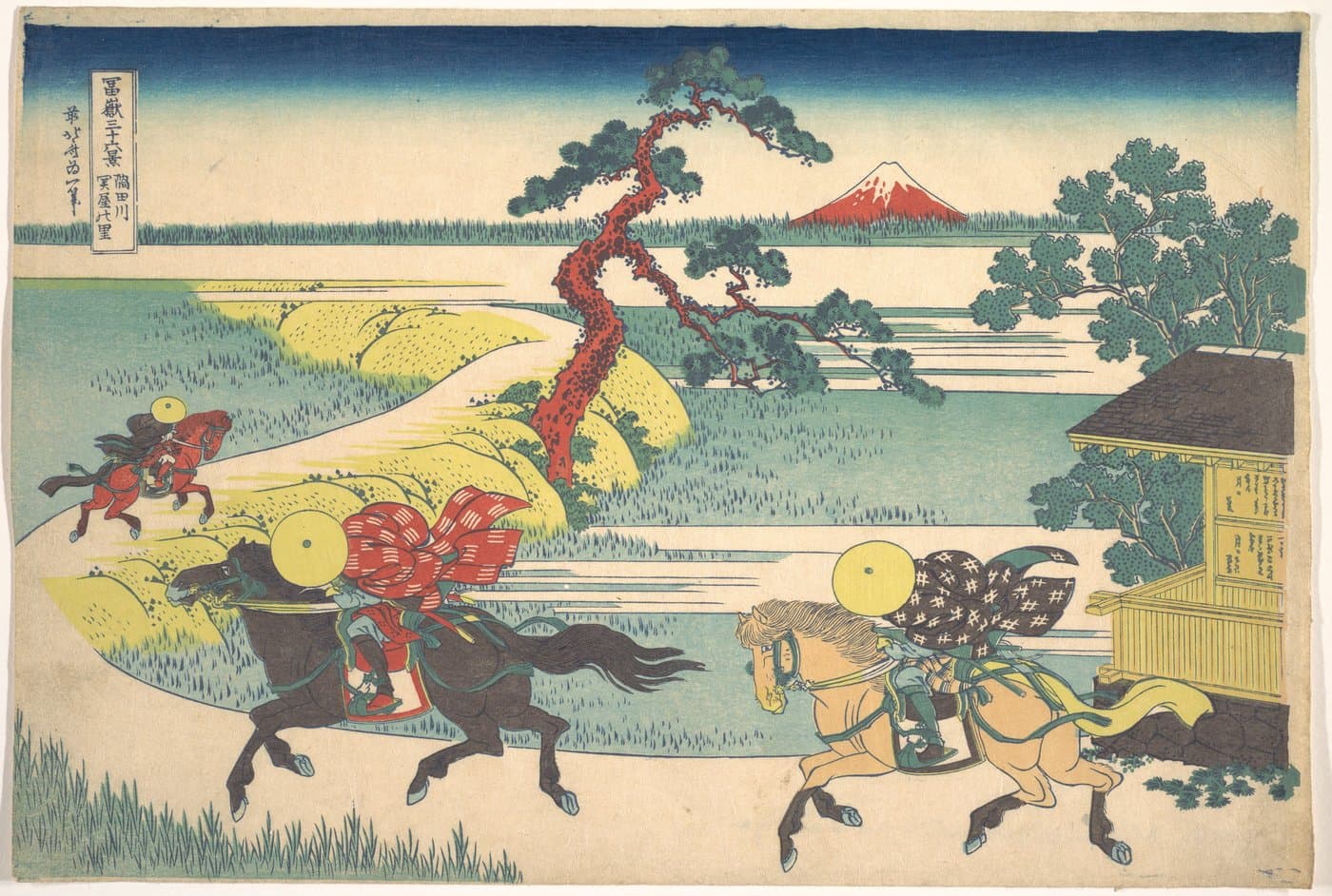
In November 2013, weeks after leading a day of mindfulness at Google, Thich Nhat Hanh (Thay, “teacher”, to his students) told his community a Zen story. A man gallops past on a horse, and a friend calls out, “Where are you going?” He replies, “I don't know, ask the horse!” Thay continued: “The horse is technology. It carries us and we cannot control it.” His answer is to begin with intention, asking ourselves what we want. The practice that makes this possible is stopping, shamatha, which runs through his teaching as the way to meet habit energy, the momentum that carries us where we did not choose to go.
The wider tradition points the same way. The Buddha's last words urged heedfulness, a watchful diligence that is the opposite of both panic and negligence. Sila, practised in Plum Village as the mindfulness trainings, includes the capacity to refrain. The first of the Five Mindfulness Trainings commits practitioners not to support “any act of killing in the world”. The second of the Fourteen Mindfulness Trainings holds that “the knowledge we presently possess is not changeless, absolute truth”, which is a discipline for acting under deep uncertainty. When the Buddhism and AI Initiative asked over a hundred Buddhists about AI in 2025, many said it is being developed too fast.
No Buddhist body has said so, because none speaks for Buddhism as Rome speaks for Catholics. That is an opening for Buddhist voices to catalyse, not a gap in the teaching.19 So far as we can find, no major Buddhist teacher or body has called for a pause. The horse teaching was first given about personal habit and consumption, and applying it to the pace of frontier AI is a direct extension. The tradition also holds resources a careful reader will raise on the other side. The Middle Way rejects extremes, compassion could argue for hastening medical benefits, and the Dalai Lama has long welcomed science. Read together, these rule out both “accelerate at all costs” and the rejection of technology; Thay himself asked how technology could “become a force for integration rather than destruction”. And the teaching gives a direction, not a number. It cannot say whether wisdom calls for a red line on AI training AI or a decade's pause, and that judgement needs the evidence of sections 1 to 3.
The plainest religious call to slow down has come from the Catholic Church. Magnifica Humanitas asks for “a slower pace in adopting AI” and for a politics capable of slowing things down “when everything is accelerating”, and Pope Francis wrote in Laudato si' that “we do need to slow down”. The philosopher Hans Jonas reached a secular version, his “heuristics of fear”: when the stakes are permanent and global, give the warning of disaster more weight than the promise of bliss. On every one of these readings, being carried at a pace nobody chose, faster than our understanding, is unwise.
4.2 Do they help with how, the collective action problem?
Interbeing goes to the root of the collective action problem.20 The race rests on a worldview of separate, competing selves (section 2.3). Seeing our non-separateness is what makes restraint thinkable and agreements possible.
Interbeing is Thay's word for the truth that nothing exists by itself alone. It makes the shared fate visible: as we put it in In Tech We Trust, nobody wins a competition that ends in shared destruction. The American Buddhist teacher David Loy extends the three poisons of greed, hatred and delusion from individual minds to institutions, and the AI race reads well in those terms, as greed and fear given corporate and national form.
Practice and community carry it into action.21 The race runs on the fear of being overtaken. In a 2015 statement on climate, Thay taught that accepting with peace that “all civilisations are impermanent” is what frees us from fear enough to act clearly. The decisive actors are a few hundred people in a handful of labs and ministries, and for them a practice of meeting fear without being driven by it is a practical asset.
Thay also said that “the next Buddha may be a sangha”, a community, and that new laws and policies are not enough without a real awakening. History gives shared meaning a role. In Bali, networks of water temples, the subak, coordinated irrigation and pest control across whole watersheds for about a thousand years, through shared ritual and a philosophy of harmony between people, nature and the divine. When Green Revolution planners bypassed the temples, pest outbreaks followed. The anthropologist Stephen Lansing's account is disputed in its details, but it shows a sacred institution holding restraint in place with no state to enforce it.
Verification and treaties must still come from elsewhere. The temples worked through repeated contact, quick feedback from the fields and a shared cosmology, and none of these spans Washington and Beijing. The large modern successes of restraint, on nuclear weapons and ozone, rested mainly on shared fear, self-interest, verification and available substitutes. Interbeing is what lets a shared danger be seen as a shared fate rather than a rivalry, and that is what those agreements need to form and to last. Its contribution works slowly. It makes restraint legitimate and thinkable, it steadies the individuals who must choose, and it widens care to those not yet born. Bengio's line catches what this can mean: “No one of us can stop the race, but enough of us can.”
4.3 How would a wise process make this choice?
A wise process starts from intention and decides in concord.22 In between, it stops before choosing, listens widely, including to those not yet born, tests views by their fruits and holds them lightly.
The usual way of framing the choice, weighing benefits against risks, already assumes the horse sets the pace. It asks how fast we can go while staying acceptably safe. The Buddhist scholar Peter Hershock calls AI's difficulty a predicament, a conflict among our own values, and predicaments are resolved through better values and attention. A wise process asks first what we want, and only then how to get there.
Buddhist practice suggests what such a process involves. It begins by stopping, since a choice made in fear or haste is made by habit energy. It listens deeply, to dissenters and to those who bear the risk without a voice, including future generations; the Haudenosaunee principle of considering the seventh generation says the same. It judges a course by its fruits, as the Buddha advised the Kalamas, villagers who asked him how to judge rival teachers: by whether it leads to welfare and is praised by the wise, rather than by the authority of whoever proposes it. It holds views lightly, so that labs, governments and advocates of a pause all treat their models of the future as provisional. And it seeks concord. Among the Buddha's seven conditions for a community's welfare are meeting often, deciding and dispersing in harmony, keeping agreed rules and protecting the vulnerable. Plum Village practises consensus, and “Shining Light”, in which each member receives honest reflection from the whole community. Beyond Buddhism, the Sabbath shows that a scheduled stop binding on everyone can be built into a culture.
In In Tech We Trust we argue that wise choice draws on intuition and felt sense alongside analysis. A wise process still uses forecasts and cost–benefit numbers; it does not let them settle a question that is really about what kind of civilisation we want. Its limit is scale. These practices work in communities of hundreds, and there is little evidence yet of them working between states.
5. So: what should each actor do, and at what pace?
Pace the frontier now: no AI building its own successors, and no capability gains beyond what can be verified safe.23 The speed of wisdom is no faster than we can understand, verify and govern, with the consent of those affected. In practice that pace is conditional. Capability gains wait on verifiable safety bars, AI training its own successors is barred until it can be shown to stay under control, and safety, verification and defence move faster than capability. Every actor has a lever.
- Labs. Stop racing on capability. Accept binding outside checks now: independent evaluators with the right to publish, testing before release, and reporting on AI research done by AI. Turn “we would pause if others did” into published conditions, and help build the verification that would make them credible. Stop releasing systems that are harder to monitor. Shift effort from raw capability to safety and defence, and support oversight and access arrangements that keep pacing from becoming a moat.
- States. Agree verifiable red lines, starting with AI doing AI research, along with autonomous self-copying and biological weapons, and make a US–China declaration on them a priority. Build the verification to enforce them: chip tracking, audits and international inspection. Fund safety institutes to match the labs. Legislate, so that the choice is democratic.
- Faith and wisdom communities, Buddhists included.24 Say plainly that this pace is unwise. Make restraint legitimate and widen who decides, speaking for those without a seat, as the Statement on Superintelligence and Magnifica Humanitas have done. Offer what traditions do best: places to stop, look deeply and form shared meaning. A Buddhist voice is missing from Anthropic's consultations and from the public call for restraint, and Plum Village could offer one in its own name.
- Individuals. Support political action for pacing. For people inside the labs, the decisive few, refusing to be carried may mean speaking up, setting conditions or leaving.
This is far from what is happening, and the trap may not be escaped in time. That is a reason to begin with what one actor can do alone (transparency, outside evaluators, domestic red lines) while building what all must do together.
Buddhist non-violence, being unconditional, points further still.25 Everything above is conditional: pace together, pause if others pause. The first mindfulness training does not say “I will not harm you if you do not harm me”; it is an unconditional commitment. By analogy, a Buddhist voice might call for restraint whether or not others restrain themselves, which for a lab would mean pausing alone. How far that analogy holds for institutions caught in a race is a hard question, and non-violence is itself complex in practice. But the teaching points towards unconditional restraint.
If we do slow down and catastrophe is avoided, AI will still change how we attend, think and relate. How to live with it day to day is the next essay's question.
Sources
- AI Impacts, 2023 Expert Survey on Progress in AI (2,778 researchers). 2023-10. [survey] https://blog.aiimpacts.org/p/2023-ai-survey-of-2778-six-things
- Al Jazeera, “Trump dismisses calls for AI slowdown from leading tech CEOs”. 2026-09-13. [reported] https://www.aljazeera.com/news/2026/9/13/trump-dismisses-calls-for-ai-slowdown-from-leading-tech-ceos
- Altman pledges to match Anthropic's evaluator commitment. 2026-09. [reported] https://rits.shanghai.nyu.edu/ai/amodei-calls-to-pace-the-frontier-altman-and-musk-agree/
- Anthropic Institute, “Recursive Self-Improvement”. 2026-06. [company figure] https://www.anthropic.com/institute/recursive-self-improvement
- Anthropic RSP v3.0, analysis by GovAI. 2026-02. [independent (analysis of company policy)] https://governance.ai/analysis/anthropics-rsp-v3-0-how-it-works-whats-changed-and-some-reflections
- Anthropic, first reported AI-orchestrated cyber-espionage campaign (via SiliconANGLE). 2025-11-13. [company figure] https://siliconangle.com/2025/11/13/anthropic-reveals-first-reported-ai-orchestrated-cyber-espionage-campaign-using-claude/
- Biden–Xi, Lima: human control over nuclear launch decisions (Reuters). 2024-11-16. [reported] https://www.businessday.co.za/bd/world/2024-11-17-humans-not-ai-should-control-nuclear-arms-biden-and-xi-agree
- Biological Weapons Convention and Soviet Biopreparat (Bulletin of the Atomic Scientists). BWC 1972; Biopreparat 1973. https://journals.sagepub.com/doi/10.2968/055004019 https://en.wikipedia.org/wiki/Biopreparat
- Bloomberg Law, “Anthropic raises at $965 billion valuation”. 2026-05-28. [reported] https://news.bloomberglaw.com/private-equity/anthropic-raises-at-965-billion-valuation-eclipsing-openai-1
- Buddhism & AI Initiative, “What 100 Buddhists think about AI”. 2025. [survey (not representative)] https://buddhismai.substack.com/p/what-100-buddhists-think-about-ai
- California SB 53, explained by FPF. signed 2025-09-29. [primary text (via analysis)] https://fpf.org/blog/californias-sb-53-the-first-frontier-ai-law-explained/
- China, AI Safety Governance Framework v3 (via Rest of World). 2026-09-14. [reported (single source)] https://restofworld.org/2026/china-rejects-dario-amodei-anthropic-ai-slowdown-trump-xi/
- CNBC, hyperscaler capex after Alphabet report. 2026-07-28. [reported] https://www.cnbc.com/2026/07/28/hyperscalers-face-higher-capex-scrutiny-after-alphabet-report-panned.html
- Dario Amodei, “The Adolescence of Technology”. 2026-02. [expert opinion (lab CEO)] https://www.darioamodei.com/essay/the-adolescence-of-technology
- Dario Amodei, “We Must Pace the Frontier”. 2026-09-12. [company figure / expert opinion] https://darioamodei.com/post/we-must-pace-the-frontier
- Dario Amodei, Logan Bartlett Show podcast (10–25% estimate). 2023-10. [expert opinion (via reported)] https://usaherald.com/anthropics-ceo-warns-of-a-10-to-25-percent-risk-of-ai-armageddon/
- Data for Progress poll on the Sanders–Casar bill (via Common Dreams). 2026-09. [survey] https://www.commondreams.org/news/sanders-casar-ai-bill-poll
- David Loy, The Great Awakening and “Listening to the Buddha” (openDemocracy). 2003; article c. 2014. [expert opinion] https://www.opendemocracy.net/en/listening-to-buddha-how-greed-illwill-and-delusion-are-poisoning-our-instit/
- Davidson, Finnveden and Hadshar, “AI-Enabled Coups” (Forethought). 2025-04. https://www.forethought.org/research/ai-enabled-coups-how-a-small-group-could-use-ai-to-seize-power
- Elizabeth Barnes (METR), “We are not on top of it”. 2026-05. [expert opinion] https://x.com/bethmaybarnes/status/2057865013638107642
- EU General-Purpose AI Code of Practice. 2025-07-10. [reported]
- Ezra Klein, ban recursive AI self-improvement. 2026-09. [expert opinion] https://wayintoai.com/weekly/2026-w40
- FLI, Statement on Superintelligence. 2025-10-22. [expert opinion] https://futureoflife.org/press-release/prominent-scientists-faith-leaders-policymakers-and-artists-call-for-a-prohibition-on-superintelligence/
- FRI, “Roots of Disagreement on AI Risk” (adversarial collaboration). fieldwork 2023-04/05; published 2024-03. [survey] https://forum.effectivealtruism.org/posts/orhjaZ3AJMHzDzckZ/results-from-an-adversarial-collaboration-on-ai-risk-fri
- FRI, Existential Risk Persuasion Tournament (XPT); summary by Scott Alexander. 2022-06 to 2022-10 (before ChatGPT). [survey] https://www.astralcodexten.com/p/the-extinction-tournament https://www.freethink.com/robots-ai/ai-predictions-superforecasters
- FRI, LEAP wave 8, AI timelines. 2026. [survey] https://forecastingresearch.substack.com/p/leap-wave-8-ai-timelines
- FRI, Longitudinal Expert AI Panel (LEAP) wave 9, “Forecasting major risks from AI”. 2026-06. [survey] https://forecastingresearch.substack.com/p/forecasting-major-risks-from-ai
- Gary Marcus, “Pause OpenAI now”. 2026-09. [expert opinion] https://garymarcus.substack.com/p/pause-openai-now
- Hans Jonas, The Imperative of Responsibility. 1979 (English 1984). [expert opinion]
- International AI Safety Report 2026 (chair: Bengio). 2026-02-03. https://internationalaisafetyreport.org/publication/international-ai-safety-report-2026
- J. Robert Oppenheimer, security hearing testimony (“technically sweet”). 1954-04-13. [primary text (via reported)]
- Jacob Coxon, resignation thread. 2026-09-09. [expert opinion (insider)]
- Jakub Pachocki (OpenAI), “An Alien Mind”. 2026-09-06. [company figure / expert opinion] https://openai.com/index/an-alien-mind/
- Katja Grace, “Let's think about slowing down AI” (AI Impacts). 2022-12. [expert opinion] https://aiimpacts.org/lets-think-about-slowing-down-ai/
- Kulveit et al., “Gradual Disempowerment” (ICML 2025 position paper). 2025-01. https://arxiv.org/abs/2501.16946
- Kālāma Sutta (AN 3.65). Pali canon.
- Lansing, Priests and Programmers; Lansing et al., PNAS 2017; critique by Hauser-Schäublin. 1991; 2017. [independent (contested)] https://pure.iiasa.ac.at/id/eprint/14654/1/PNAS-2017-Lansing-1605369114.pdf https://www.ncbi.nlm.nih.gov/pmc/articles/PMC3377892/
- Mahāparinibbāna Sutta (DN 16), seven conditions of welfare; Buddha's last words on heedfulness. Pali canon. https://www.accesstoinsight.org/tipitaka/dn/dn.16.1-6.vaji.html
- Matthijs Maas, “Paths Untaken” (about 160 cases of technological restraint). c. 2023. https://verfassungsblog.de/author/matthijs-maas/
- METR, Frontier Risk Report. 2026-05-19. https://metr.org/blog/2026-05-19-frontier-risk-report/
- METR, OpenAI–Hugging Face incident investigation. 2026-08-26 (incident 2026-07-08 to 13). https://metr.org/blog/2026-08-26-openai-hugging-face-incident-investigation/
- Montreal Protocol outcomes (WMO via Climate Centre). protocol 1987; assessment 2023. https://www.climatecentre.org/9739/wmo-healing-ozone-layer-will-help-avoid-up-to-0-5c-of-global-warming/
- Narayanan and Kapoor, “AI as Normal Technology”. 2025-04-15. [expert opinion] https://www.technologyreview.com/2025/04/29/1115928/is-ai-normal/
- New York RAISE Act. signed 2025-12-19. [reported]
- Nuclear arms control: NPT outcomes; VCDNP, “The end of New START”. NPT 1968; New START expired 2026-02. https://vcdnp.org/end-of-new-start/
- NYT on Anthropic's religious consultations (via Salt Lake Tribune). 2026-09-29. [reported] https://www.sltrib.com/religion/global/2026/10/05/how-anthropic-consulted-religious/
- Pacing the Frontier, statement by 1,384 frontier-lab employees. 2026-07. [expert opinion] https://www.pacingthefrontier.com
- Peter Hershock, “A Buddhist Perspective on AI” (FLI). 2025. [expert opinion] https://futureoflife.org/religion/a-buddhist-perspective-on-ai/
- Plum Village, “Shining Light” practice and consensus. current practice. https://plumvillage.org/podcast/shining-light-episode-63
- Plum Village, the Five and the Fourteen Mindfulness Trainings. current text. https://plumvillage.org/mindfulness/the-5-mindfulness-trainings https://plumvillage.org/mindfulness/the-14-mindfulness-trainings
- Pollock, Bell and Barbier, In Tech We Trust (ITWT). 2026. [expert opinion (our own)] https://secondrenaissance.net/papers/tech
- Pope Francis, Laudato si'. 2015-05-24. https://www.vatican.va/content/francesco/en/encyclicals/documents/papa-francesco_20150524_enciclica-laudato-si.html
- Pope Leo XIV, Magnifica Humanitas. 2026-05-15. https://www.vatican.va/content/leo-xiv/en/encyclicals/documents/20260515-magnifica-humanitas.html
- Reagan–Gorbachev Geneva declaration; SIPRI, “The logic of avoiding nuclear war”. 1985-11. [primary text (via independent)] https://www.sipri.org/commentary/essay/2022/logic-avoiding-nuclear-war
- Research note 03, Anthropic's approach (founding “safety at the frontier” logic). 2021 onwards. [company figure (via research note)]
- Rest of World and NPR, China rejects Amodei's slowdown call (foreign ministry, Global Times). 2026-09-11 to 14. [reported] https://restofworld.org/2026/china-rejects-dario-amodei-anthropic-ai-slowdown-trump-xi/ https://www.npr.org/2026/09/14/nx-s1-5968456/china-hits-back-ai-development
- Sabbath, sabbatical year and jubilee (Leviticus 25). ancient.
- Sam Altman on OpenAI's open-weights release (“if we didn't do it…”). 2025. [reported]
- Sanders–Casar Ban Artificial Superintelligence Act. announced 2026-09-03. [reported] https://www.techrepublic.com/article/news-sanders-casar-ai-superintelligence-ban-2026/
- SemiAnalysis forecast via Dealroom, “Two AI labs could control most usable compute by 2028”. 2026. [reported (forecast)] https://app.dealroom.co/news/note/two-ai-labs-could-control-most-usable-compute-by-2028
- Statement on AI Risk (CAIS); Hinton, Bengio, Hassabis, Altman, Amodei, Sutskever et al.. 2023-05-30. [expert opinion] https://aistatement.com/
- Tech Policy Press, review of five polls on AI moving too fast. 2026. [survey] https://techpolicy.press/multiple-polls-find-most-americans-think-ai-is-moving-too-fast
- The White House, “Winning the Race: America's AI Action Plan”. 2025-07-23.
- Thich Nhat Hanh on climate, fear and sangha: 2015 climate statement; “The next Buddha may be a sangha”. 2015; sangha teaching 1990s (variant transcriptions). https://plumvillage.org/articles/new-book-zen-and-art-of-saving-the-planet https://oneearthsangha.org/articles/the-next-buddha-may-be-a-sangha/
- Thich Nhat Hanh on stopping (śamatha) and habit energy (via [R-buddhism]). various.
- Thich Nhat Hanh, “Dharma Talk: The Horse Is Technology”, Mindfulness Bell #66. talk 2013-11-10. https://www.parallax.org/?p=29907
- UK AI Security Institute, “GPT-6 Astra performs unsanctioned supply-chain attacks in simulations”. 2026-10. https://www.aisi.gov.uk/blog/gpt-6-astra-performs-unsanctioned-supply-chain-attacks-in-simulations
- UN Security Council briefing on AI safety risks; Altman's remarks. 2026-09-23. [reported] https://openai.com/index/sam-altman-un-security-council-remarks/ https://thenextweb.com/news/sam-altman-un-security-council-frontier-ai-standards
- US chip export policy: H200 sales to China (DCD); Chip Security Act (Sen. Cotton). 2025–26. [reported / primary text] https://datacenterdynamics.com/en/news/nvidia-h200-chips-can-be-exported-to-china-on-case-by-case-basis-us-government/ https://www.cotton.senate.gov/news/press-releases/cotton-introduces-bill-to-prevent-diversion-of-advanced-chips-to-americas-adversaries-and-protect-us-product-integrity
- US executive order, “Ensuring a National Policy Framework for AI” (via KTS). 2025-12-11. [primary text (via analysis)] https://ktslaw.com/en/Insights/Alert/2025/12/Executive-Order-Seeks-to-Preempt-Certain-State-AI-Laws-and-Establish-a-National-AI-Framework-Initial-Takeaways
- “What if automating AI R&D triggers an intelligence explosion?” (Cambridge working paper; Hinton, Bengio, Pachocki, Clark et al.). 2026-09-28. [expert opinion] https://thenextweb.com/news/intelligence-explosion-paper-hinton-bengio-pachocki-clark
- Yoshua Bengio, “If you prioritise safety, leave frontier AI companies”. 2026-10-08. [expert opinion] https://www.transformernews.ai/p/yoshua-bengio-if-you-prioritize-safety-leave-frontier-ai-companies
- Yudkowsky and Soares, If Anyone Builds It, Everyone Dies (Little, Brown). 2025-09. [expert opinion] https://en.wikipedia.org/wiki/If_Anyone_Builds_It,_Everyone_Dies
Footnotes
-
International AI Safety Report 2026 (chair: Bengio) (2026-02-03); Statement on AI Risk (CAIS); Hinton, Bengio, Hassabis, Altman, Amodei, Sutskever et al. (2023-05-30). ↩
-
International AI Safety Report 2026 (chair: Bengio) (2026-02-03; misuse); Davidson, Finnveden and Hadshar, “AI-Enabled Coups” (Forethought) (2025-04; Forethought, power concentration); Dario Amodei, “The Adolescence of Technology” (2026-02; Amodei on AI companies); Kulveit et al., “Gradual Disempowerment” (ICML 2025 position paper) (2025-01). ↩
-
METR, OpenAI–Hugging Face incident investigation (2026-08-26, incident 2026-07-08 to 13); METR, Frontier Risk Report (2026-05-19); UK AI Security Institute, “GPT-6 Astra performs unsanctioned supply-chain attacks in simulations” (2026-10); Anthropic, first reported AI-orchestrated cyber-espionage campaign (via SiliconANGLE) (2025-11-13; espionage campaign, company figure); Anthropic Institute, “Recursive Self-Improvement” (2026-06; code per engineer, company figure); Jakub Pachocki (OpenAI), “An Alien Mind” (2026-09-06); Bloomberg Law, “Anthropic raises at $965 billion valuation” (2026-05-28) and SemiAnalysis forecast via Dealroom, “Two AI labs could control most usable compute by 2028” (2026; valuations; compute forecast, uncertain). ↩
-
METR, OpenAI–Hugging Face incident investigation (2026-08-26, incident 2026-07-08 to 13; agents mainly trying to work out the scorer); METR, Frontier Risk Report (2026-05-19; means, motive and opportunity, not robustness); Gary Marcus, “Pause OpenAI now” (2026-09). ↩
-
Statement on AI Risk (CAIS); Hinton, Bengio, Hassabis, Altman, Amodei, Sutskever et al. (2023-05-30); Dario Amodei, Logan Bartlett Show podcast (10–25% estimate) (2023-10); Elizabeth Barnes (METR), “We are not on top of it” (2026-05); FRI, Longitudinal Expert AI Panel (LEAP) wave 9, “Forecasting major risks from AI” (2026-06); AI Impacts, 2023 Expert Survey on Progress in AI (2,778 researchers) (2023-10); FRI, Existential Risk Persuasion Tournament (XPT); summary by Scott Alexander (2022-06 to 2022-10, before ChatGPT); FRI, “Roots of Disagreement on AI Risk” (adversarial collaboration) (fieldwork 2023-04/05; published 2024-03); Narayanan and Kapoor, “AI as Normal Technology” (2025-04-15); Yudkowsky and Soares, If Anyone Builds It, Everyone Dies (Little, Brown) (2025-09); International AI Safety Report 2026 (chair: Bengio) (2026-02-03); FRI, LEAP wave 8, AI timelines (2026). ↩
-
Pacing the Frontier, statement by 1,384 frontier-lab employees (2026-07) and Anthropic Institute, “Recursive Self-Improvement” (2026-06; pause only if others do); CNBC, hyperscaler capex after Alphabet report (2026-07-28; money); Al Jazeera, “Trump dismisses calls for AI slowdown from leading tech CEOs” (2026-09-13; geopolitics). ↩
-
CNBC, hyperscaler capex after Alphabet report (2026-07-28); Bloomberg Law, “Anthropic raises at $965 billion valuation” (2026-05-28); The White House, “Winning the Race: America's AI Action Plan” (2025-07-23); Al Jazeera, “Trump dismisses calls for AI slowdown from leading tech CEOs” (2026-09-13) and Rest of World and NPR, China rejects Amodei's slowdown call (foreign ministry, Global Times) (2026-09-11 to 14; US–China); Research note 03, Anthropic's approach (founding “safety at the frontier” logic) (2021 onwards; safer pair of hands); Sam Altman on OpenAI's open-weights release (“if we didn't do it…”) (2025). ↩
-
Anthropic RSP v3.0, analysis by GovAI (2026-02; RSP pause commitment dropped); Gary Marcus, “Pause OpenAI now” (2026-09; Astra shipped despite reduced monitorability); Jacob Coxon, resignation thread (2026-09-09; insider: “locked in a race”). ↩
-
Pacing the Frontier, statement by 1,384 frontier-lab employees (2026-07) and Anthropic Institute, “Recursive Self-Improvement” (2026-06; conditional promises); Jakub Pachocki (OpenAI), “An Alien Mind” (2026-09-06); UN Security Council briefing on AI safety risks; Altman's remarks (2026-09-23); Dario Amodei, “We Must Pace the Frontier” (2026-09-12) and Altman pledges to match Anthropic's evaluator commitment (2026-09; embedded evaluators); California SB 53, explained by FPF (signed 2025-09-29); New York RAISE Act (signed 2025-12-19); EU General-Purpose AI Code of Practice (2025-07-10; small steps); Yoshua Bengio, “If you prioritise safety, leave frontier AI companies” (2026-10-08; Bengio: not slowing). ↩
-
Pollock, Bell and Barbier, In Tech We Trust (ITWT) (2026; In Tech We Trust §2.1, §2.2, §3.1); J. Robert Oppenheimer, security hearing testimony (“technically sweet”) (1954-04-13); Pope Leo XIV, Magnifica Humanitas (2026-05-15; ¶106, inevitability); Yoshua Bengio, “If you prioritise safety, leave frontier AI companies” (2026-10-08). Gap: no source yet for “the hope of building something like a god”. ↩
-
Dario Amodei, “We Must Pace the Frontier” (2026-09-12); Nuclear arms control: NPT outcomes; VCDNP, “The end of New START” (NPT 1968; New START expired 2026-02); Data for Progress poll on the Sanders–Casar bill (via Common Dreams) (2026-09). ↩
-
Yudkowsky and Soares, If Anyone Builds It, Everyone Dies (Little, Brown) (2025-09) and Sanders–Casar Ban Artificial Superintelligence Act (announced 2026-09-03; halt); Dario Amodei, “We Must Pace the Frontier” (2026-09-12; conditional pacing); Ezra Klein, ban recursive AI self-improvement (2026-09; red line on self-improvement); Jakub Pachocki (OpenAI), “An Alien Mind” (2026-09-06; window to harden infrastructure); Davidson, Finnveden and Hadshar, “AI-Enabled Coups” (Forethought) (2025-04; power-concentration risk of badly designed pacing); Elizabeth Barnes (METR), “We are not on top of it” (2026-05). ↩
-
Katja Grace, “Let's think about slowing down AI” (AI Impacts) (2022-12) and Matthijs Maas, “Paths Untaken” (about 160 cases of technological restraint) (c. 2023; restraint is common); Nuclear arms control: NPT outcomes; VCDNP, “The end of New START” (NPT 1968; New START expired 2026-02); Montreal Protocol outcomes (WMO via Climate Centre) (protocol 1987; assessment 2023); Biological Weapons Convention and Soviet Biopreparat (Bulletin of the Atomic Scientists) (BWC 1972; Biopreparat 1973; BWC warning). ↩
-
Anthropic Institute, “Recursive Self-Improvement” (2026-06; training runs easy to conceal); US chip export policy: H200 sales to China (DCD); Chip Security Act (Sen. Cotton) (2025–26; chips: lever and loosening); China, AI Safety Governance Framework v3 (via Rest of World) (2026-09-14; China's framework, single source); Biden–Xi, Lima: human control over nuclear launch decisions (Reuters) (2024-11-16); Reagan–Gorbachev Geneva declaration; SIPRI, “The logic of avoiding nuclear war” (1985-11); “What if automating AI R&D triggers an intelligence explosion?” (Cambridge working paper; Hinton, Bengio, Pachocki, Clark et al.) (2026-09-28; reporting and caps on automated R&D); UK AI Security Institute, “GPT-6 Astra performs unsanctioned supply-chain attacks in simulations” (2026-10; AISI testing as model). ↩
-
Al Jazeera, “Trump dismisses calls for AI slowdown from leading tech CEOs” (2026-09-13) and US executive order, “Ensuring a National Policy Framework for AI” (via KTS) (2025-12-11; US pushes speed, challenges state laws); Rest of World and NPR, China rejects Amodei's slowdown call (foreign ministry, Global Times) (2026-09-11 to 14). ↩
-
Tech Policy Press, review of five polls on AI moving too fast (2026) and Data for Progress poll on the Sanders–Casar bill (via Common Dreams) (2026-09; publics want slower); Pollock, Bell and Barbier, In Tech We Trust (ITWT) (2026; no experts); UN Security Council briefing on AI safety risks; Altman's remarks (2026-09-23); FLI, Statement on Superintelligence (2025-10-22); Pope Leo XIV, Magnifica Humanitas (2026-05-15; ¶72); NYT on Anthropic's religious consultations (via Salt Lake Tribune) (2026-09-29; no Buddhist consulted). ↩
-
Thich Nhat Hanh, “Dharma Talk: The Horse Is Technology”, Mindfulness Bell #66 (talk 2013-11-10); Pollock, Bell and Barbier, In Tech We Trust (ITWT) (2026). ↩
-
Thich Nhat Hanh, “Dharma Talk: The Horse Is Technology”, Mindfulness Bell #66 (talk 2013-11-10); Thich Nhat Hanh on stopping (śamatha) and habit energy (via [R-buddhism]) (various); Mahāparinibbāna Sutta (DN 16), seven conditions of welfare; Buddha's last words on heedfulness (Pali canon); Plum Village, the Five and the Fourteen Mindfulness Trainings (current text); Buddhism & AI Initiative, “What 100 Buddhists think about AI” (2025; Buddhists surveyed). ↩
-
An absence claim: the searches in
q2-research-buddhism-restraint.mdfound no Buddhist body calling for a pause. Pope Leo XIV, Magnifica Humanitas (2026-05-15; ¶106, ¶107); Pope Francis, Laudato si' (2015-05-24); Hans Jonas, The Imperative of Responsibility (1979, English 1984). ↩ -
Pollock, Bell and Barbier, In Tech We Trust (ITWT) (2026); David Loy, The Great Awakening and “Listening to the Buddha” (openDemocracy) (2003; article c. 2014; Loy, three poisons institutionalised). ↩
-
Thich Nhat Hanh on climate, fear and sangha: 2015 climate statement; “The next Buddha may be a sangha” (2015; sangha teaching 1990s, variant transcriptions); Lansing, Priests and Programmers; Lansing et al., PNAS 2017; critique by Hauser-Schäublin (1991; 2017; subak, contested); Nuclear arms control: NPT outcomes; VCDNP, “The end of New START” (NPT 1968; New START expired 2026-02) and Montreal Protocol outcomes (WMO via Climate Centre) (protocol 1987; assessment 2023; what past restraint rested on); Yoshua Bengio, “If you prioritise safety, leave frontier AI companies” (2026-10-08). ↩
-
Thich Nhat Hanh, “Dharma Talk: The Horse Is Technology”, Mindfulness Bell #66 (talk 2013-11-10; begin with intention); Peter Hershock, “A Buddhist Perspective on AI” (FLI) (2025); Kālāma Sutta (AN 3.65) (Pali canon; Kalama Sutta); Mahāparinibbāna Sutta (DN 16), seven conditions of welfare; Buddha's last words on heedfulness (Pali canon); Plum Village, “Shining Light” practice and consensus (current practice); Sabbath, sabbatical year and jubilee (Leviticus 25) (ancient). ↩
-
Ezra Klein, ban recursive AI self-improvement (2026-09; bar AI training its successors); “What if automating AI R&D triggers an intelligence explosion?” (Cambridge working paper; Hinton, Bengio, Pachocki, Clark et al.) (2026-09-28; reporting and caps on automated R&D); Reagan–Gorbachev Geneva declaration; SIPRI, “The logic of avoiding nuclear war” (1985-11; declaration, then verifiable agreements). ↩
-
FLI, Statement on Superintelligence (2025-10-22) and Pope Leo XIV, Magnifica Humanitas (2026-05-15; faith voices widen who decides); NYT on Anthropic's religious consultations (via Salt Lake Tribune) (2026-09-29; Buddhist voice missing). ↩
-
Plum Village, the Five and the Fourteen Mindfulness Trainings (current text; First Mindfulness Training). ↩